What Silicon Valley taught me about ambition
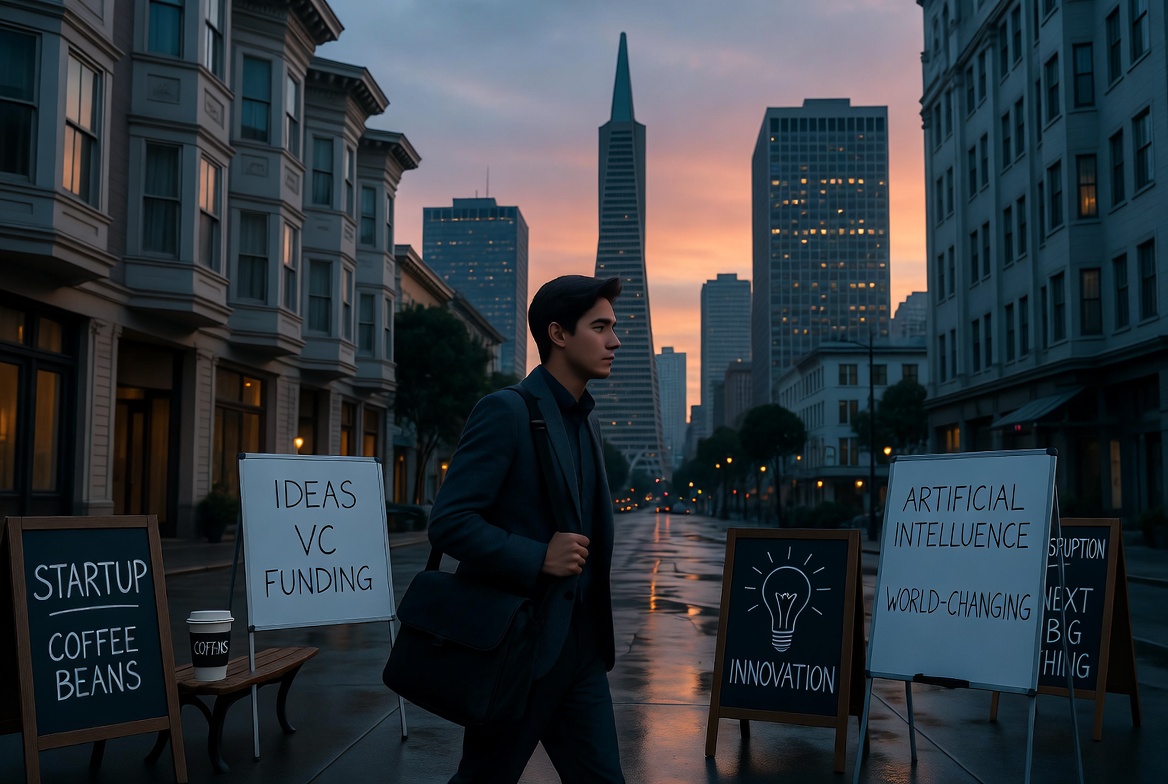
When I left France for California in the summer of 2025, I was not only moving to another country. I was moving toward an idea.
Like millions of people around the world, I had spent years hearing stories about Silicon Valley. The birthplace of Apple, Google, Nvidia and countless startups. A place where students became founders, where founders became billionaires and where entire industries could be reinvented in a matter of years. From Europe, the mythology of Silicon Valley often feels exaggerated. Some people describe it as a utopia. Others dismiss it as a bubble. I arrived with curiosity, but also with skepticism.
After nearly a year living and working in San Francisco, I can confidently say that the mythology gets one thing right.
There is something different about ambition here.
The most important lesson Silicon Valley taught me is not how to build a startup, raise capital or deploy artificial intelligence. It taught me how differently a society can think about possibility.
In France, we are fortunate to have extraordinary engineers, researchers and entrepreneurs. Some of the most talented people I have ever met are French. Yet I have often felt that ambition is treated with a certain level of suspicion. Success can make people uncomfortable. Failure can follow someone for years. Ambitious projects are frequently evaluated through the lens of risk before they are evaluated through the lens of opportunity.
Silicon Valley operates differently.
The first thing that struck me after arriving was the way people talk about projects. In many parts of the world, when meeting someone for the first time, the conversation quickly turns toward status. What company do you work for? What is your title? What degree do you have?
In Silicon Valley, I repeatedly encountered a different question.
« What are you building? »
Not who are you.
Not where did you study.
Not how much money do you make.
What are you building?
At first, I did not fully appreciate the significance of that question. Over time, I realized it reflects an entire worldview. People are less interested in your credentials than in your trajectory. Less interested in your past than in the future you are trying to create.
That shift changes everything.
When a society becomes obsessed with building, people begin evaluating ideas differently. Ambition becomes normal. Large goals become acceptable. Failure becomes part of the process rather than evidence that the process should never have been attempted.
One of the most remarkable things I have observed throughout the Bay Area is the willingness of people to support one another. Every week, I attend events involving artificial intelligence, robotics, infrastructure, venture capital, sustainability and entrepreneurship. I constantly see people making introductions, sharing opportunities, recommending contacts and helping others solve problems.
Of course, Silicon Valley is competitive. Some of the most ambitious people in the world live here. Yet beneath that competition exists an unusual culture of collaboration.
A founder introduces another founder to an investor.
An engineer recommends a researcher.
An investor connects a student with an entrepreneur.
A mentor spends an hour helping someone they barely know.
The ecosystem functions because people understand that helping others often strengthens the ecosystem itself.
This creates something difficult to replicate elsewhere.
Talent attracts talent.
Ambition attracts ambition.
Success attracts more people willing to pursue success.
The result is a form of concentration that I have never experienced before.
Every day, thousands of exceptionally capable individuals are working on some version of the future. Artificial intelligence. Robotics. Biotechnology. Climate technologies. Space exploration. Energy systems. Quantum computing. The specific industries matter less than the collective mindset. Everywhere you go, people are attempting to build something larger than themselves.
What surprised me most is how compressed time feels.
Historically, building an influential company often required decades. Today, artificial intelligence, cloud infrastructure and global connectivity have dramatically accelerated the pace of execution. Teams of a few dozen people can now create products used by millions. Startups can achieve valuations measured in billions of dollars within a few years and sometimes much faster. Whether these valuations are justified is a separate question. What matters is that the perceived distance between an idea and global impact has become dramatically shorter.
When people believe extraordinary outcomes are possible, they begin behaving differently.
They think bigger.
They move faster.
They take more risks.
They become more resilient.
This may be Silicon Valley’s greatest competitive advantage. Not capital. Not technology. Not even talent.
Belief.
The belief that ambitious projects are worth pursuing.
The belief that difficult problems can be solved.
The belief that individuals can create disproportionate impact.
That mindset becomes contagious.
Over the past year, I have felt my own ambitions evolve. Not because I suddenly believe success is guaranteed, but because I have become surrounded by people attempting things that once seemed impossible. When enough people around you are trying to change industries, improve human health, build new technologies or solve global challenges, your perception of what is achievable begins to expand.
This may ultimately be the most valuable thing Silicon Valley exports to the world.
Not companies.
Not products.
Not technology.
Ambition.
The conviction that the future is not something that simply happens to us.
It is something we can help build.
That idea brought me to California.
It is also the lesson I will carry with me long after I leave.
