Why the most valuable people in Silicon Valley are not specialists
Before moving to Silicon Valley, I assumed expertise was the ultimate competitive advantage.
The logic seemed straightforward. The world was becoming increasingly complex. Technologies were becoming more sophisticated. Industries were becoming more specialized. Success, I thought, would increasingly belong to those capable of mastering a specific domain better than anyone else.
After nearly a year living and working in the Bay Area, I still believe expertise matters.
But I no longer believe it is enough.
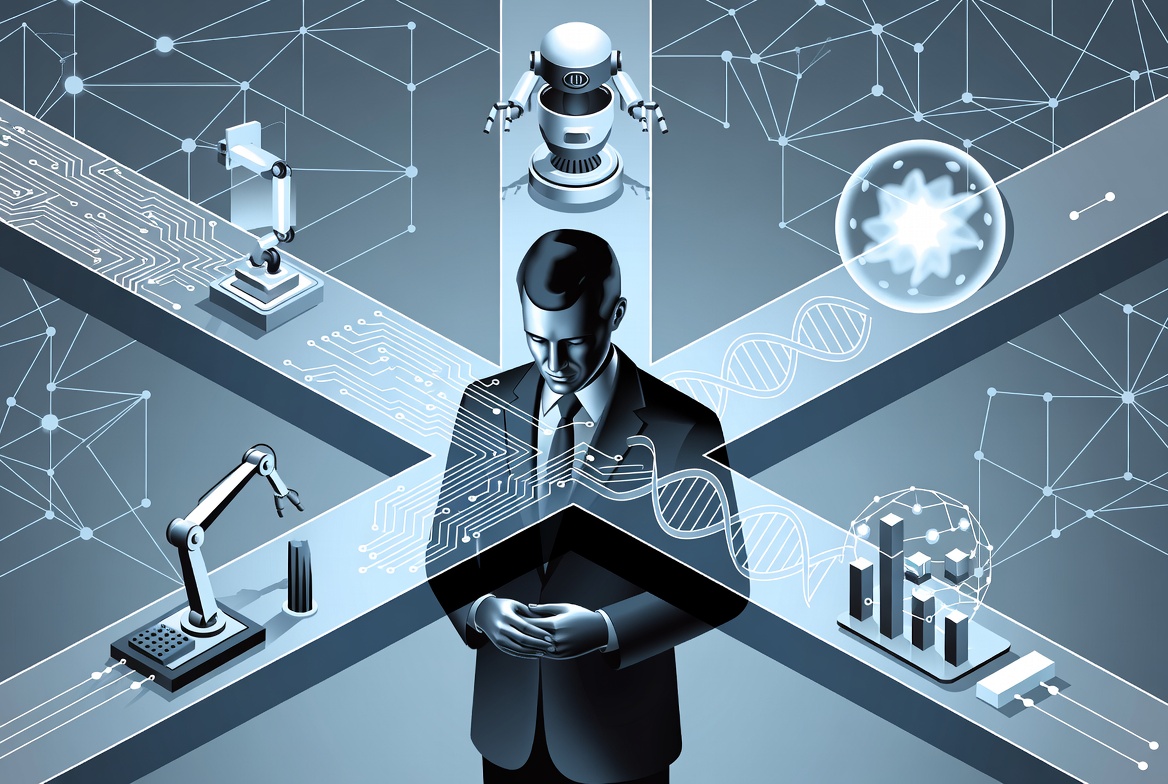
One of the most surprising observations I have made is that many of the most influential people in Silicon Valley are not defined by a single specialty. They are defined by their ability to connect multiple fields together.
This realization emerged gradually.
As part of my work, I spend a significant amount of time attending events, conferences and discussions involving artificial intelligence, infrastructure, venture capital, robotics, sustainability and entrepreneurship. Over time, I began noticing a recurring pattern. The individuals generating the most interesting ideas were often those operating at the intersection of disciplines.
The founder building an AI company understood energy systems.
The robotics entrepreneur understood manufacturing.
The investor understood psychology.
The researcher understood business.
The engineer understood public policy.
Rather than mastering a single domain, they appeared capable of navigating several.
At first, this seemed counterintuitive.
Modern education encourages specialization. Careers reward specialization. Organizations frequently organize themselves around specialization. Yet many of the challenges emerging today refuse to fit neatly inside traditional categories.
Artificial intelligence is not merely a software problem.
It is also an infrastructure problem.
An energy problem.
A policy problem.
A societal problem.
A talent problem.
Similarly, climate technologies are not purely environmental questions. They involve engineering, economics, politics and human behavior. Longevity is not simply a healthcare issue. It touches biotechnology, artificial intelligence, data science and psychology.
The most important opportunities increasingly exist between disciplines rather than within them.
Silicon Valley appears unusually good at recognizing this reality.
Stanford offers a useful example. Many of the most interesting events I have attended on campus bring together people from completely different backgrounds. Engineers discuss ideas with physicians. Entrepreneurs debate researchers. Investors interact with students. Climate scientists exchange perspectives with technologists.
The objective is not merely collaboration.
It is intellectual cross-pollination.
New ideas often emerge when concepts from one field are applied to another.
The Valley has institutionalized this process.
This may explain why curiosity is so highly valued here.
In many professional environments, there is pressure to remain within one’s area of expertise. In Silicon Valley, curiosity often functions as a signal of ambition. People ask questions about topics far outside their immediate responsibilities. Founders attend events unrelated to their industries. Engineers spend evenings discussing philosophy, economics or biology.
The assumption seems to be that knowledge compounds across domains.
The more fields one understands, the more opportunities one has to recognize patterns others miss.
This perspective has changed the way I think about my own career.
When I first entered the technology industry, I largely defined myself through specific sectors. Data centers. Infrastructure. Edge computing. Artificial intelligence.
Today, I increasingly view these topics as components of larger systems.
The most interesting conversations I have had over the past year have often occurred when discussing subjects I initially knew very little about. Longevity. Robotics. Venture capital. Urban development. Human performance. Energy systems.
What began as curiosity frequently evolved into insight.
This may ultimately become one of the defining skills of the twenty-first century.
Not knowing everything.
No one can.
But developing the ability to learn across disciplines, identify connections and synthesize ideas from different domains.
Artificial intelligence will likely accelerate this trend.
As AI becomes capable of performing increasingly specialized tasks, uniquely human value may shift toward integration. Connecting ideas. Building relationships. Recognizing opportunities. Understanding systems.
In a world filled with specialists, the people capable of connecting specialties may become increasingly important.
Silicon Valley seems to understand this intuitively.
Many of the most successful people I have encountered are not the world’s leading experts in a single field.
They are translators between fields.
Bridges between communities.
Connectors of ideas.
And perhaps that is why the Valley continues producing innovation at such an extraordinary pace.
Innovation rarely occurs because someone knows one thing better than everyone else.
More often, it occurs because someone sees a connection that nobody else noticed.
