American Sports: More Than a Game, a Cultural Experience
- 4 min read
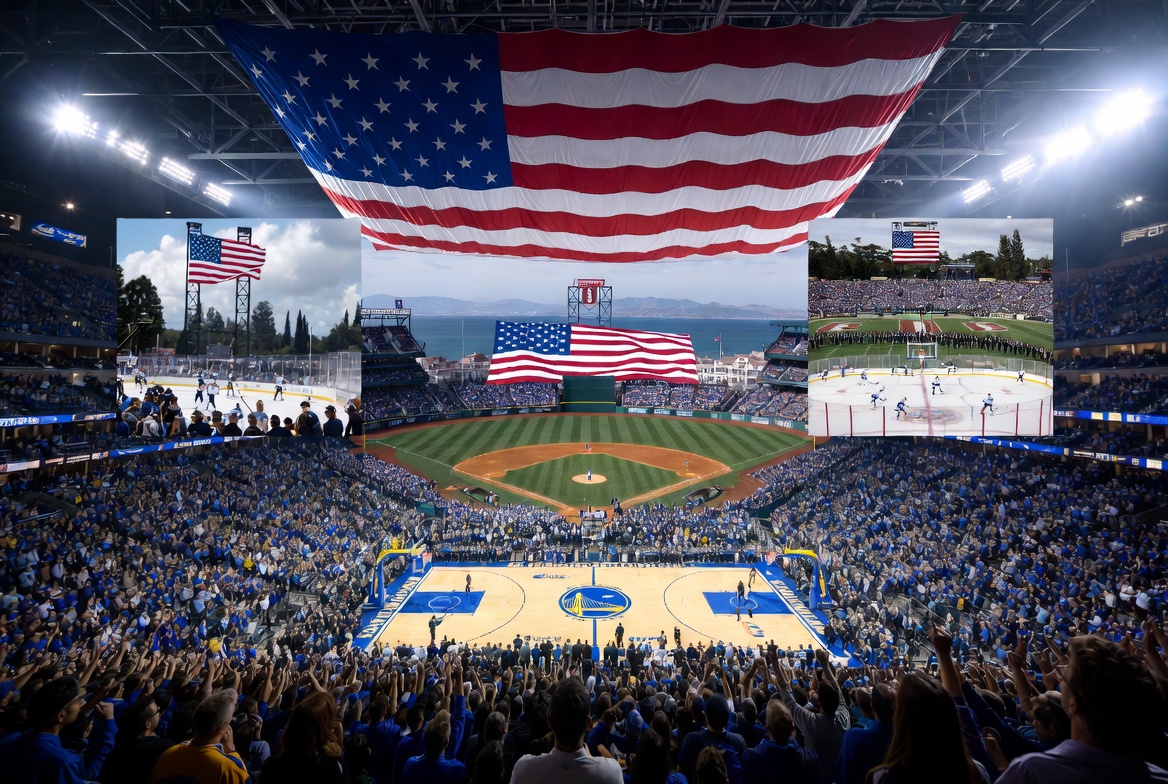
Before moving to California, I thought I understood American sports.
Like many Europeans, my perception came from movies, television series, documentaries, and social media. I had seen packed stadiums, marching bands, cheerleaders, national anthems, and passionate fans filling arenas every weekend.
What I did not realize was how deeply sports are woven into American culture.
After arriving in the Bay Area, I quickly understood that attending sporting events was not optional.
It was part of the experience.
One of my first goals was to see the Golden State Warriors play.
As a French basketball fan, I already knew the team’s reputation. Steph Curry had become a global icon, and the Warriors represented one of the most successful franchises of the modern NBA era.
Yet nothing prepared me for the atmosphere inside the arena.
The lights.
The music.
The entertainment.
The introductions.
The crowd.
Everything feels bigger, louder, and more immersive than most sporting events I had previously experienced in Europe.
The game itself is only part of the show.
The entire evening is designed as an experience.
The same feeling returned when I attended a San Francisco Giants game at Oracle Park.
Even for someone who did not grow up following baseball, it was impossible not to appreciate the setting. Sitting along the San Francisco waterfront, watching the game with the Bay as a backdrop, helped me understand why baseball remains such an important part of American culture.
Then came hockey.
Watching the San Jose Sharks introduced me to another side of American sports. The speed, physicality, and intensity of ice hockey are difficult to fully appreciate until you experience them in person.
And beyond professional sports, there is college sports culture.
Whether at Stanford or Berkeley, football games attract thousands of students, alumni, families, and supporters. The connection between universities and athletics is unlike anything I had seen in France.
What surprised me most is how sports create a sense of community.
People wear team colors.
Families attend games together.
Friends organize entire weekends around sporting events.
Generations share the same traditions.
Sports become part of personal identity.
One moment, in particular, stood out to me.
Before many games, the entire stadium pauses for the national anthem.
Thousands of people stand.
Caps come off.
Conversations stop.
Everyone faces the flag.
As a French citizen, I will always have a special attachment to La Marseillaise and my own country’s traditions.
But experiencing the American national anthem inside a packed stadium is something unique.
There is a collective energy and emotion that is difficult to describe unless you witness it firsthand.
For a few minutes, regardless of political views, professional backgrounds, or personal differences, everyone participates in the same ritual.
It is one of the most striking cultural experiences I have had in the United States.
What I ultimately discovered is that American sports are about much more than competition.
They are about belonging.
They are about community.
They are about tradition.
And perhaps most importantly, they are about bringing people together.
The movies were right.
The packed stadiums.
The passionate fans.
The college football games.
The NBA atmosphere.
The giant American flags.
The pregame ceremonies.
It all exists.
And experiencing it in person has given me a much deeper understanding of American culture than I ever expected.
In many ways, if Silicon Valley taught me about innovation, American sports taught me about America itself.
