Longevity and the rise of the human operating system
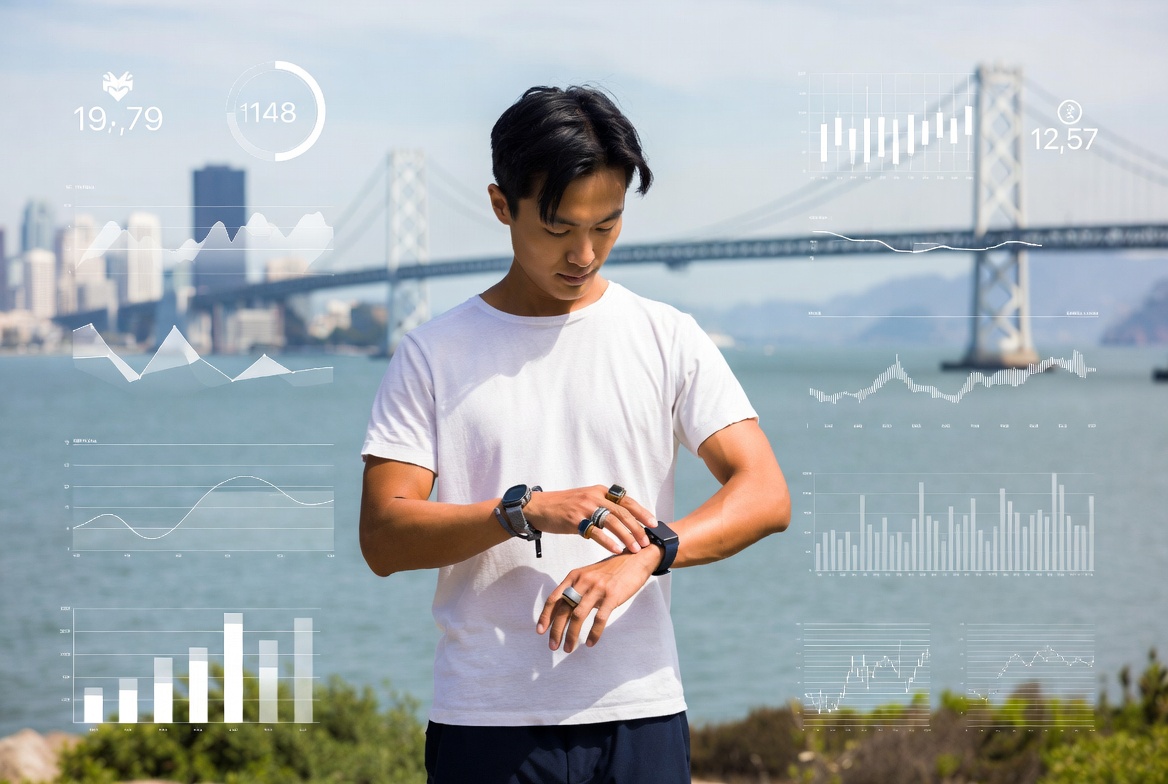
One of the most surprising trends I have observed during my first year in Silicon Valley has little to do with artificial intelligence.
At least, not directly.
While AI dominates headlines, investment flows and conference agendas, another movement has quietly been gaining momentum across San Francisco and parts of the broader Bay Area. It appears in private events, startup gatherings, Stanford discussions, wellness communities, biotechnology conferences and increasingly among founders, investors and engineers. The movement is longevity.
For many people outside California, longevity still sounds like a niche wellness trend. Images of expensive supplements, extreme diets and eccentric billionaires often dominate public perception. After spending time around the ecosystem, however, I have come to view the phenomenon differently. What is emerging in Silicon Valley is not simply a wellness movement. It is the beginning of a broader effort to understand, measure and optimize human performance over long periods of time.
In many ways, longevity has become the biological equivalent of artificial intelligence. Both fields are attempting to answer a similar question: how can complex systems operate more effectively over time? In one case the system is a machine. In the other, it is the human body.
What makes the Bay Area unique is that these conversations increasingly overlap.
Over the past year, I have attended events focused on health optimization, human performance, preventive medicine and longevity science. Unlike traditional wellness discussions, these gatherings are often deeply data-driven. Participants discuss biomarkers, sleep quality, cardiovascular health, metabolic performance and biological age with the same level of detail that software engineers discuss system architecture.
The goal is not simply to live longer.
The goal is to remain healthier, more productive and more capable throughout life.
This distinction matters.
According to the World Health Organization, global life expectancy has increased dramatically over the last century, reaching approximately 73 years worldwide. In developed countries, life expectancy often exceeds 80 years. Yet healthy life expectancy, sometimes referred to as healthspan, remains significantly lower. Many people spend the final decade or more of their lives dealing with chronic diseases, mobility limitations and declining physical capabilities.
The longevity community is increasingly focused on closing that gap.
Rather than adding years to life, many researchers and entrepreneurs are attempting to add life to years.
This perspective explains why technology entrepreneurs have become so interested in the field. Silicon Valley has always been obsessed with optimization. Founders optimize products. Engineers optimize systems. Investors optimize capital allocation. Longevity represents the application of that same mindset to human biology.
Recent advances have accelerated interest. Wearable devices have transformed personal health monitoring. Smart watches can continuously track heart rate, sleep quality, activity levels and cardiovascular indicators. Devices such as the Samsung Galaxy Ring, Oura Ring and Ultrahuman Ring are making continuous biometric tracking increasingly accessible. What previously required clinical testing can now be monitored daily from a finger or wrist.
The scale of this shift is remarkable.
According to industry estimates, the global wearable technology market now exceeds $70 billion annually and continues to grow rapidly. Millions of users generate health data every day. For the first time in human history, individuals can continuously measure biological signals that were previously invisible.
This data is changing behavior.
People are adjusting sleep schedules based on recovery scores. Athletes monitor heart rate variability. Professionals optimize exercise routines. Entrepreneurs track stress levels and metabolic performance. Health is becoming measurable in real time.
Artificial intelligence is likely to accelerate this trend further.
As biometric data becomes more abundant, AI systems will increasingly help individuals interpret information and identify patterns that humans might miss. Personalized health recommendations, predictive diagnostics and individualized treatment strategies may become significantly more sophisticated over the coming decade.
Stanford has become one of the places where these discussions frequently intersect. During several public talks and events I attended, speakers explored questions surrounding aging, human performance, preventive medicine and the future of healthcare. What struck me was the shift in mindset. The conversation is gradually moving away from treating disease toward maintaining health.
This is where the concept of Human 2.0 begins to emerge.
The phrase can sound futuristic or even controversial, but at its core the idea is relatively simple. Humans are increasingly using technology to understand and improve their biological systems. The first generation of consumer technology connected us to information. The next generation may connect us more deeply to ourselves.
Some advocates push this vision further than others.
Few examples illustrate this better than Bryan Johnson, whose highly publicized longevity experiments have attracted global attention. Johnson reportedly spends millions of dollars annually pursuing a rigorous protocol involving medical testing, exercise, nutrition and biological monitoring. Whether one agrees with his methods or not, his popularity reflects a broader cultural shift. Questions that once belonged primarily to medical researchers are becoming topics of mainstream discussion.
Of course, longevity remains a field filled with uncertainty. Aging is extraordinarily complex. Many interventions remain unproven. The industry occasionally attracts exaggerated claims and unrealistic promises. Skepticism remains healthy and necessary.
Yet dismissing the movement entirely would be a mistake.
