Why infrastructure is becoming the most important technology sector of the AI era
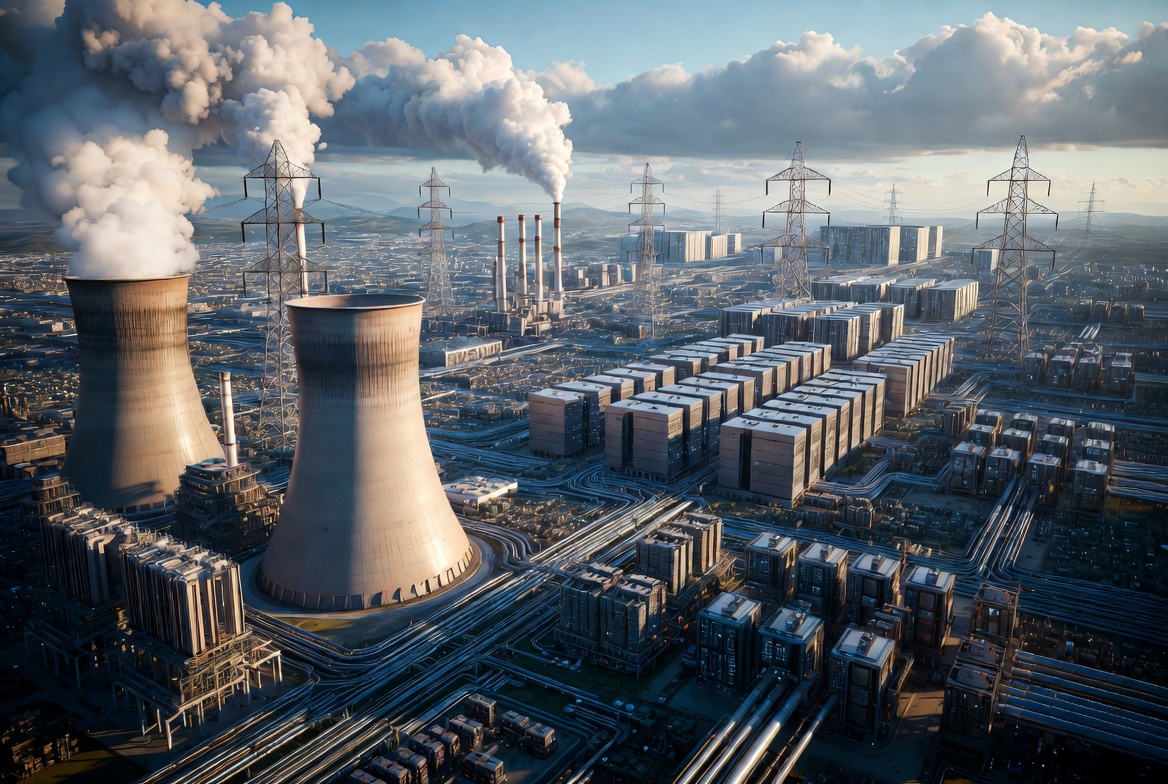
For most of the last twenty years, software dominated the technology industry.
The biggest success stories of the internet era were largely software companies. Search engines, social networks, mobile applications, cloud platforms and digital marketplaces transformed how people communicate, work and consume information. Investors gravitated toward software because it scaled rapidly, required relatively little capital and generated extraordinary returns. The prevailing assumption was simple: software was eating the world.
Today, after spending a year immersed in Silicon Valley’s artificial intelligence ecosystem, I increasingly believe we are entering a different phase.
Artificial intelligence is forcing technology back into the physical world.
This may be one of the most important yet underappreciated developments currently taking place across the industry. While public attention remains focused on models, chatbots and AI agents, some of the most consequential conversations in Silicon Valley are increasingly about infrastructure. Data centers. Power generation. Cooling technologies. Semiconductors. Electrical grids. Fiber networks. Energy storage. The deeper one moves into the AI ecosystem, the more obvious it becomes that intelligence is only as powerful as the infrastructure supporting it.
A useful way to understand the current moment is to compare artificial intelligence with previous technological revolutions. The internet did not succeed solely because of websites. It succeeded because billions of dollars were invested into fiber networks, telecommunications infrastructure and data centers. Electrification was not merely about inventing the light bulb. It required power plants, transmission lines and entirely new industrial systems. Railroads transformed economies not because trains were exciting but because infrastructure connected cities, industries and people.
Artificial intelligence appears to be following a similar pattern.
The difference is that the infrastructure requirements are emerging much faster than many anticipated.
Over the past year, nearly every major technology conference I attended eventually converged on the same topics. At Nvidia GTC, discussions repeatedly returned to data center capacity, power consumption and GPU deployment. At Dell Technologies World, enterprise leaders focused on infrastructure readiness. At Stanford events, conversations about AI frequently evolved into conversations about energy systems and sustainability. Even among startup founders, discussions increasingly revolved around compute access rather than simply product design.
This shift reflects a fundamental reality.
Modern AI systems consume extraordinary amounts of computational resources. Training advanced models requires thousands, sometimes tens of thousands, of GPUs operating simultaneously. Inference workloads continue to expand as AI becomes integrated into enterprise software, consumer products, industrial systems and robotics. Every additional layer of intelligence requires additional layers of infrastructure.
This creates an interesting paradox.
For years, technology moved toward abstraction. Cloud computing allowed developers to ignore physical infrastructure. Software became detached from hardware. Artificial intelligence is reversing part of that trend. The more intelligence we create, the more attention we must pay to the physical systems that support it.
This reality is particularly visible when examining energy.
The International Energy Agency estimates that electricity demand from data centers could increase dramatically over the coming decade. Technology companies are already investing billions of dollars into new infrastructure projects. Utilities are reassessing long-term demand forecasts. Governments are beginning to consider how AI may influence national energy strategies.
For the first time in many years, energy has become a technology topic.
The same is true for cooling.
Before working in AI infrastructure, I spent nearly five years in France within the immersion cooling and sustainable data center industry. At the time, cooling was often viewed as a specialized engineering concern. Today, it has become a strategic topic. The density of modern AI hardware is pushing thermal management systems toward new limits. Technologies such as liquid cooling and immersion cooling are attracting growing interest because the economics of AI increasingly depend on infrastructure efficiency.
Semiconductors represent another example.
The extraordinary rise of Nvidia has highlighted something many people outside the industry rarely considered. Compute matters. Chips matter. Manufacturing matters. The ability to design and produce advanced hardware has become one of the defining competitive advantages of the AI era. The future of intelligence depends not only on algorithms but also on the physical machines capable of executing them.
Yet perhaps the most interesting aspect of this transformation is what it reveals about innovation itself.
For much of the past decade, technology culture celebrated software founders. The archetype was the entrepreneur building applications from a laptop. That model remains powerful, but the next generation of transformative companies may increasingly emerge from infrastructure sectors. Energy. Robotics. Computing hardware. Industrial automation. Advanced manufacturing. Climate technologies. These industries often require more capital, more engineering and longer development cycles, but they may ultimately create more enduring value.
Silicon Valley appears to be recognizing this shift.
Some of the most ambitious founders I have met over the past year are not building social applications or consumer products. They are building energy companies, robotics companies, infrastructure platforms and next-generation industrial systems. They understand that intelligence alone is not enough. Intelligence requires foundations.
This perspective has changed how I think about technology.
When people discuss artificial intelligence, they often focus on what models can do. Increasingly, I find myself asking a different question. What infrastructure is required to make those capabilities available at global scale?
The answer leads to data centers.
To electrical grids.
To cooling technologies.
To semiconductors.
To edge computing.
To sustainability.
In other words, it leads to infrastructure.
Artificial intelligence may be remembered as the defining technology of our era. Yet future historians may conclude that the most important story was not the rise of AI itself. It was the infrastructure renaissance that AI triggered.
The software captures the headlines.
The infrastructure will shape the future.
