The people who build civilization rarely become famous
When people think about progress, they usually think about famous names.
Steve Jobs.
Elon Musk.
Thomas Edison.
The Wright Brothers.
Marie Curie.
These individuals deserve recognition for their extraordinary contributions. Yet focusing exclusively on famous innovators can obscure a deeper truth.
Civilization is not built by a handful of famous people.
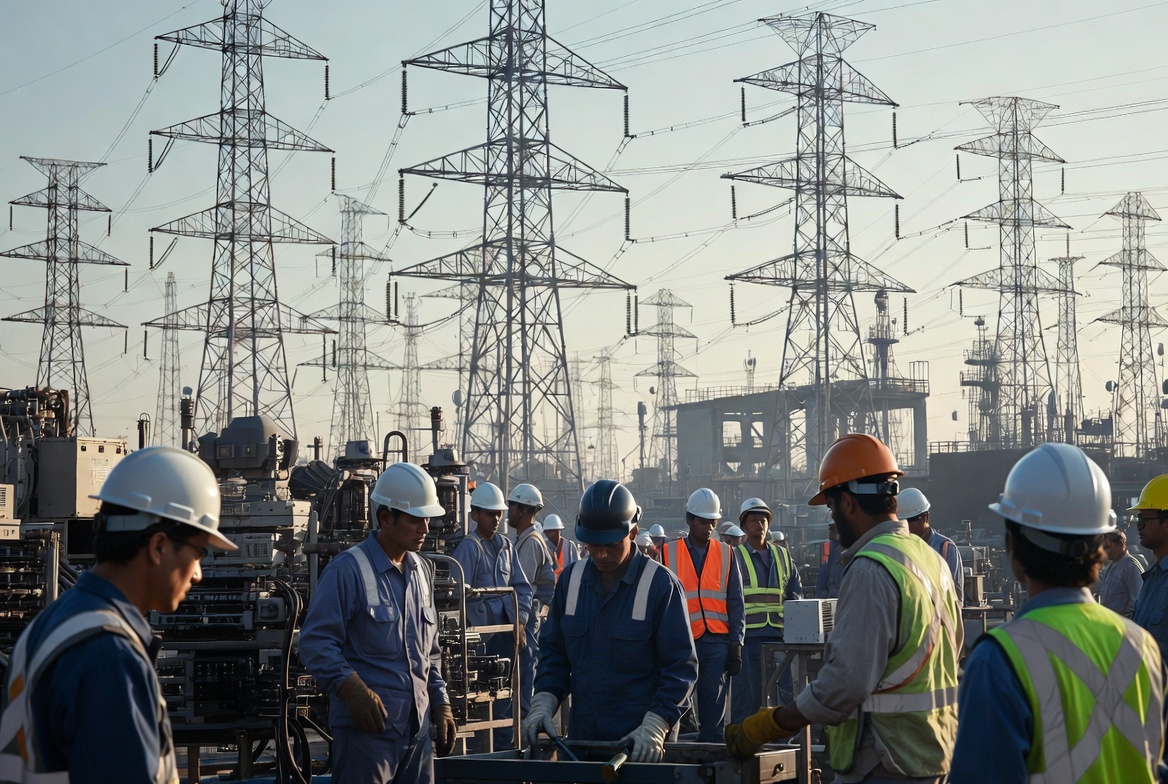
It is built by millions of largely invisible ones.
This realization became increasingly clear to me over the past year as I traveled across California, attended conferences, visited technology companies and spent time thinking about the systems that support modern life.
The modern world depends on an astonishing number of people we rarely notice.
The engineers who design electrical grids.
The workers who maintain water infrastructure.
The technicians who operate data centers.
The scientists developing new materials.
The logistics experts coordinating global supply chains.
The construction workers building roads, bridges and power plants.
The operators maintaining networks that billions of people depend upon every day.
Most of us never learn their names.
Yet our lives depend on their work.
This invisibility is one of progress’s greatest paradoxes.
The more reliable a system becomes, the less people think about it.
Consider electricity.
A modern city can contain millions of people. Every evening, lights turn on instantly. Hospitals operate continuously. Refrigerators preserve food. Factories manufacture products. Computers process information.
Few people wake up each morning wondering whether electricity will be available.
That reliability is extraordinary.
It is also invisible.
The same applies to clean water.
For most people living in developed countries, drinking water arrives automatically. We rarely think about reservoirs, treatment facilities, pumps, engineers and thousands of kilometers of infrastructure operating continuously behind the scenes.
Success has made these systems disappear from our attention.
Until something breaks.
Then we suddenly remember how much civilization depends on them.
This idea became particularly relevant to me while working around data center infrastructure and edge computing.
Artificial intelligence currently dominates public discussion. People talk about models, applications and digital transformation. Yet behind every AI interaction lies a physical reality.
Servers.
Power systems.
Cooling technologies.
Fiber networks.
Semiconductors.
Energy infrastructure.
Without these foundations, artificial intelligence simply would not exist.
The same is true throughout history.
The Industrial Revolution is often associated with inventors.
Less attention is paid to the miners extracting coal, the workers building railways or the engineers constructing factories.
The internet is associated with software companies.
Less attention is paid to the people who laid fiber optic cables beneath oceans.
Human progress is often presented through breakthroughs.
In reality, it is sustained through maintenance.
This may be one of the most underrated ideas in modern society.
Building something is impressive.
Keeping it running for decades is often even more impressive.
Civilization depends on both.
The problem is that maintenance rarely captures attention.
A bridge that remains safe for fifty years does not generate headlines.
A water system that operates flawlessly attracts little public recognition.
A data center functioning exactly as expected is considered normal.
Yet these achievements represent enormous amounts of expertise and effort.
Perhaps this explains why I have become increasingly interested in infrastructure.
Not because infrastructure is glamorous.
Because it reveals how the world actually works.
Behind every visible success lies an invisible system.
Behind every celebrated innovation lies a network of people making that innovation possible.
The historian and writer Vaclav Smil has spent much of his career documenting this reality. Much of modern civilization depends on systems most people rarely think about. Energy. Materials. Transportation. Agriculture. Manufacturing.
These systems are not exciting in the way social media or consumer technology can be exciting.
They are something more important.
They are foundational.
Without them, everything else disappears.
This perspective has changed the way I think about progress itself.
Progress is not only the result of visionary founders and breakthrough discoveries.
It is also the result of millions of competent people doing difficult work extraordinarily well.
People solving engineering problems.
People maintaining infrastructure.
People improving systems incrementally.
People building things that may never carry their names.
In many ways, they are the true custodians of civilization.
And yet most of them will never appear in history books.
Their reward is different.
It is visible every time a light turns on.
Every time clean water flows from a tap.
Every time an airplane lands safely.
Every time a bridge carries traffic.
Every time a hospital functions.
Every time a computer connects to the internet.
Their work surrounds us constantly.
We simply stop noticing it.
Perhaps one of the most important lessons of progress studies is that civilization is not a miracle.
It is a construction.
A construction maintained every day by millions of people whose names we will never know.
The future will certainly produce new inventors, entrepreneurs and visionaries.
But it will also depend on builders.
The people who quietly keep civilization running.
The people who rarely become famous.
The people without whom progress would be impossible..


This is a text caption 
