Surviving Silicon Valley Without a Car
- 4 min read
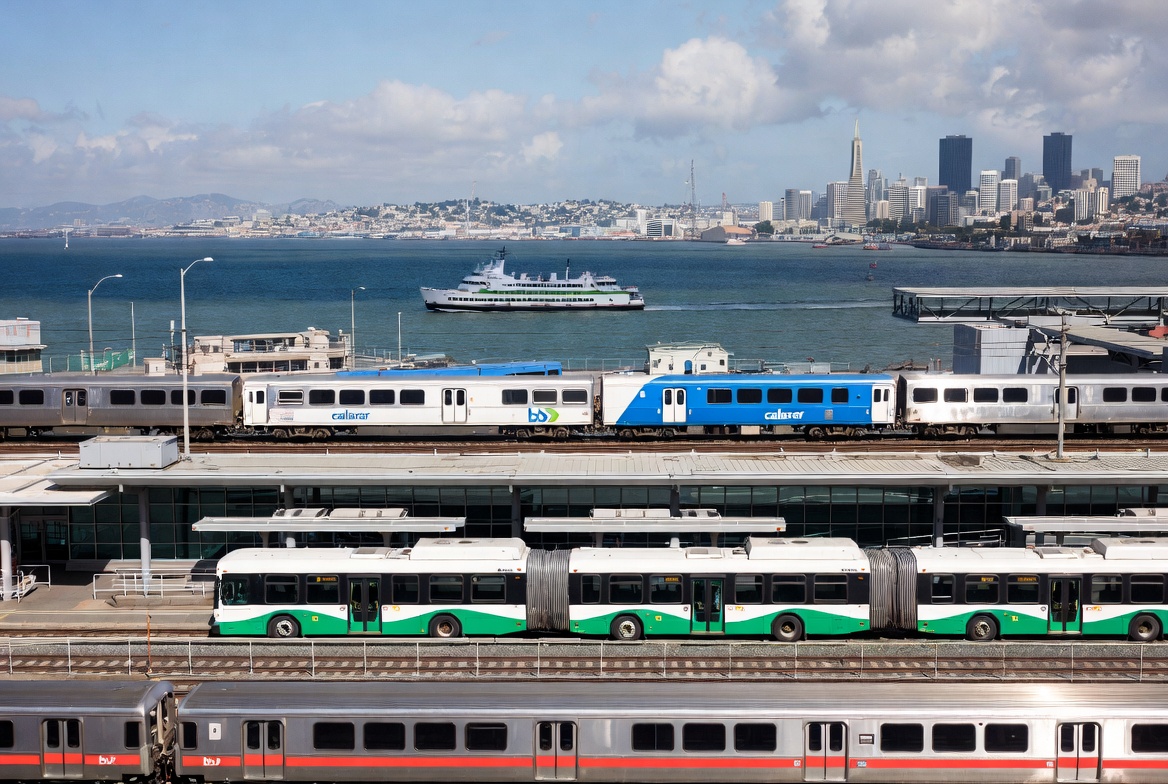
Before moving to California, there was one thing everyone kept telling me:
« You absolutely need a car. »
The advice seemed logical. After all, California is famous for its highways, suburban sprawl, and car culture. Unlike many European cities, Silicon Valley was not designed around pedestrians or public transportation.
There was just one problem.
I did not have a car.
In fact, I did not even have a driver’s license.
When I arrived in San Francisco, I expected transportation to become one of my biggest challenges.
Instead, I discovered something surprising.
The Bay Area’s public transportation network is far better than most people imagine.
Over the past year, I have relied almost entirely on buses, BART, Caltrain, ferries, rideshares, and the occasional Waymo. Together, they have allowed me to travel throughout San Francisco, Silicon Valley, and the broader Bay Area with surprising ease.
Need to get from San Francisco to Palo Alto?
Caltrain.
Heading to San Jose?
Caltrain again.
Crossing the Bay?
BART.
Moving around the city?
The bus network is extensive and often very convenient.
Of course, public transportation here is not perfect.
There are delays.
There are disruptions.
Some connections could be improved.
But as someone coming from France, I quickly realized that these issues are hardly unique to California.
In fact, I often find myself laughing when people complain about transportation delays here. Compared with some of my experiences in Europe, I have not been particularly shocked.
One thing that surprised me is how often public transportation competes with driving.
During rush hour, traveling from San Francisco to San Jose by car can easily take well over an hour.
Caltrain often takes a similar amount of time while allowing passengers to work, read, relax, or simply enjoy the ride.
The trains are generally clean, comfortable, and safe. The same applies to much of the broader transit system.
What I appreciate most is the freedom it provides.
Without owning a vehicle, I have been able to explore Stanford, Palo Alto, Mountain View, Menlo Park, San Jose, Berkeley, Oakland, Sausalito, and dozens of other communities throughout the region.
The experience has challenged one of the biggest assumptions I had before arriving.
Yes, having a car is convenient.
But contrary to popular belief, it is entirely possible to build a life, a network, and a career in Silicon Valley without one.
The Bay Area may be famous for technology.
Yet one of its most underrated innovations might simply be its ability to connect millions of people across a remarkably large and diverse region.
