CORE: Why the Future of AI Depends on Infrastructure
- 4 min read
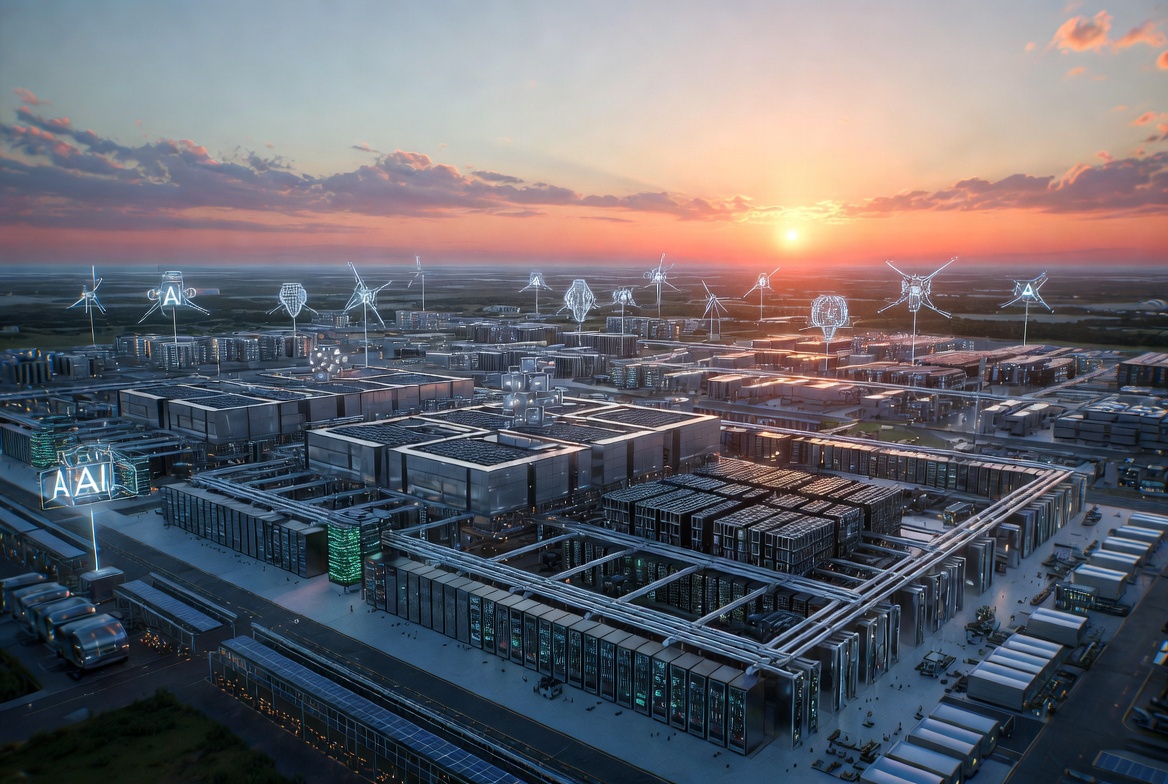
When most people think about artificial intelligence, they think about models.
They think about ChatGPT, Gemini, Claude, autonomous agents, robotics, and the extraordinary capabilities emerging from modern AI systems.
But after spending years working in digital infrastructure, datacenters, cloud computing, and sustainable technology systems, I have become increasingly convinced that the greatest challenge facing AI is no longer intelligence itself.
It is infrastructure.
Every major breakthrough in artificial intelligence increases demand for compute power. Every new model requires more GPUs, more datacenters, more electricity, more cooling, and more operational complexity. The rise of AI agents, autonomous systems, robotics, and always-on inference is accelerating this trend even further. AI is rapidly becoming an infrastructure problem.
Today, hyperscalers and infrastructure operators are investing hundreds of billions of dollars to build the next generation of AI infrastructure. Yet many of these systems remain fragmented, reactive, and heavily dependent on human operators. As AI systems become more autonomous, the infrastructure supporting them must evolve as well.
This realization led me to create CORE.
CORE stands for Creation Of Reborn Earth. The vision is simple: develop autonomous AI agents capable of continuously optimizing AI infrastructure in real time. Rather than relying solely on human operators, these agents would monitor energy consumption, cooling performance, GPU utilization, workload distribution, cloud resources, and edge infrastructure, then autonomously identify opportunities to improve efficiency and sustainability.
The idea is not to build another AI model.
The idea is to build the intelligence layer behind AI itself.
Just as operating systems manage computers, CORE aims to help manage the increasingly complex infrastructure that powers artificial intelligence. AI will eventually need AI to manage AI infrastructure.
The opportunity is enormous. AI datacenters are projected to consume vast amounts of electricity over the coming decade, while global investment in AI infrastructure continues to accelerate. Even small improvements in efficiency could translate into significant reductions in energy consumption, cooling costs, water usage, and operational complexity.
My interest in this challenge comes from both professional and personal experience. Before moving to Silicon Valley, I spent years working on sustainable datacenter systems, thermal optimization, immersion cooling, heat recovery, and digital infrastructure projects. Today, living in San Francisco and observing the rapid growth of AI firsthand, I believe the next era of innovation will not simply be about building smarter models. It will be about building smarter infrastructure.
Much of the discussion around AI focuses on what artificial intelligence can do.
Far less attention is given to what is required to sustain it.
As AI continues to scale, infrastructure will become one of the defining challenges of the next decade. The future of AI will depend not only on intelligence, but on our ability to deliver that intelligence efficiently, sustainably, and at global scale.
That is the future CORE hopes to help build.
