AI, energy and water: the sustainability challenge nobody talks about
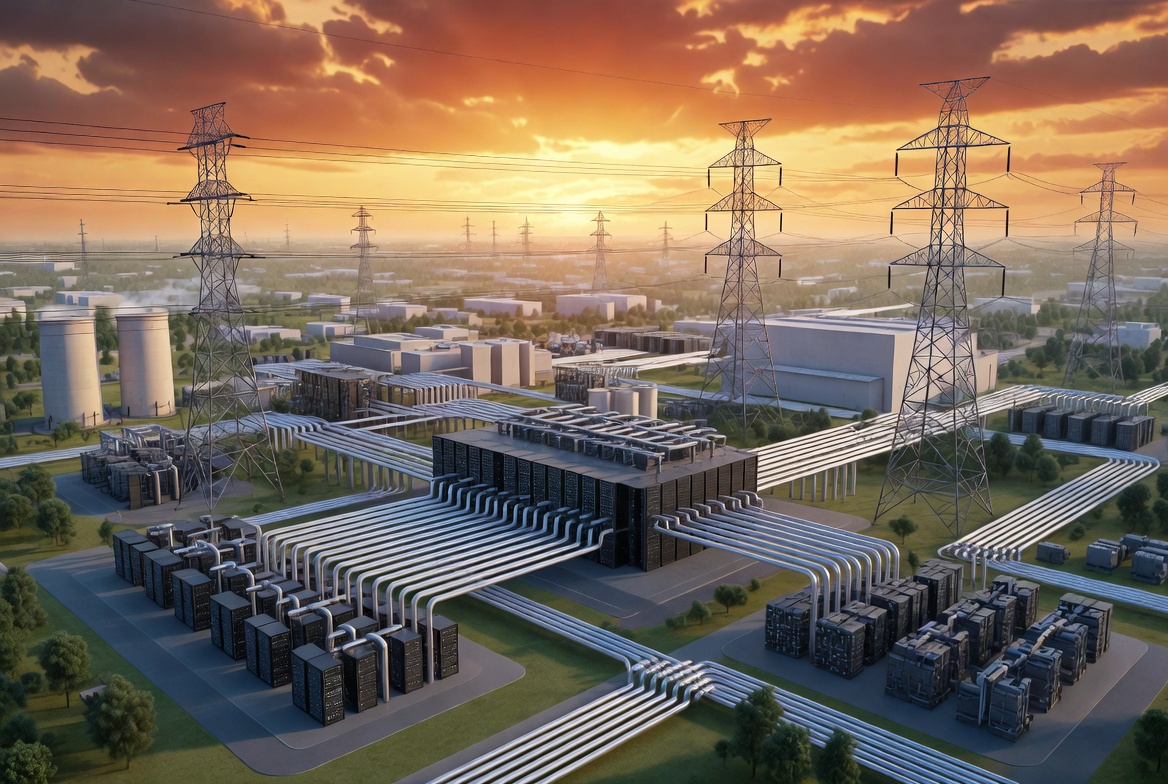
Artificial intelligence is often presented as an immaterial technology.
The public imagination associates AI with software, algorithms and digital experiences. Models generate text, create images, write code and answer questions through interfaces that appear almost frictionless. From the perspective of most users, artificial intelligence feels weightless. A prompt enters a chatbot and a response appears seconds later. The infrastructure behind that interaction remains invisible.
Yet after spending several years working around data center infrastructure, immersion cooling technologies and more recently the AI ecosystem in Silicon Valley, I have become increasingly convinced that one of the most important questions surrounding artificial intelligence has surprisingly little to do with software. It concerns energy, water and the physical resources required to support intelligence at scale.
The current AI boom is creating a strange contradiction. On one hand, artificial intelligence is frequently presented as a tool capable of accelerating scientific discovery, optimizing industrial systems and helping societies address complex challenges. On the other hand, the infrastructure supporting this transformation is becoming increasingly resource-intensive. Every new generation of models requires more computing power. Every increase in computing power requires more electricity. Greater electricity consumption generates more heat. Heat requires cooling. Cooling often requires water. What appears to be a purely digital revolution is rapidly becoming a question of physical infrastructure.
This reality has become increasingly visible across Silicon Valley. Over the past year, conversations about artificial intelligence have frequently evolved into conversations about power generation, electrical grids and data center construction. Founders discuss GPU availability. Investors discuss energy demand. Infrastructure providers discuss cooling systems. The deeper one moves into the ecosystem, the clearer it becomes that the future of AI may depend as much on energy systems as on machine learning breakthroughs.
Historically, major technological revolutions have often depended on infrastructure transitions. Industrialization required railways, steel production and electrical grids. The internet required fiber networks, data centers and global telecommunications systems. Artificial intelligence appears to be following a similar path. While public attention focuses on models and applications, an enormous infrastructure layer is quietly expanding beneath the surface.
This expansion is already influencing how technology companies think about the future. Large AI deployments require vast amounts of electricity. New data center projects increasingly compete for access to power. Utility companies are being forced to reevaluate future demand projections. Governments are beginning to examine how AI infrastructure may affect national energy strategies. The discussion is no longer limited to software innovation. It increasingly concerns resource allocation.
Water presents a second, less visible challenge.
Many people remain unaware that data centers often depend on significant cooling infrastructure. As computational density increases, managing heat becomes more difficult. Different facilities rely on different approaches, but the relationship between computing and cooling is becoming increasingly important as AI workloads scale. Technologies such as liquid cooling and immersion cooling are attracting growing attention because traditional approaches may struggle to support future generations of high-density AI infrastructure efficiently.
Having spent years around immersion-cooled infrastructure, I find this transition particularly interesting. Cooling is often treated as a secondary engineering detail. In reality, it may become one of the defining challenges of the AI era. The ability to remove heat efficiently will increasingly influence how much compute can be deployed, where infrastructure can be built and how sustainable future systems can become.
The sustainability conversation surrounding AI often suffers from excessive simplification. Some narratives portray artificial intelligence as an environmental disaster. Others assume that future technological improvements will automatically solve every efficiency challenge. Reality is likely to be more complex. AI will almost certainly increase demand for energy and computing resources. At the same time, it may also create opportunities to optimize industrial systems, improve energy management, accelerate scientific research and reduce inefficiencies across large sectors of the economy.
The question is therefore not whether AI consumes resources. It clearly does. The more important question concerns whether societies can build the infrastructure necessary to support AI responsibly.
This challenge extends beyond technology companies. Energy producers, policymakers, researchers, infrastructure providers and urban planners will all play a role. The future of artificial intelligence will not be determined solely by model developers. It will also depend on decisions regarding power generation, grid modernization, cooling technologies and infrastructure investment.
This broader systems perspective is often missing from public discussions. Artificial intelligence is frequently analyzed as a software industry because software is the most visible layer. Yet the deeper one studies the ecosystem, the more AI begins to resemble an infrastructure industry. Models may capture public attention, but infrastructure determines scale.
This may ultimately become one of the defining questions of the coming decade. Can societies continue expanding computational capacity while maintaining sustainable energy and resource systems? The answer will shape not only the future of artificial intelligence but also the broader relationship between technology and sustainability.
The most important AI challenge of the next ten years may not be teaching machines to think more effectively.
It may be learning how to power them responsibly.
