Waymo: The First Time I Felt Like I Was Living in the Future
- 4 min read
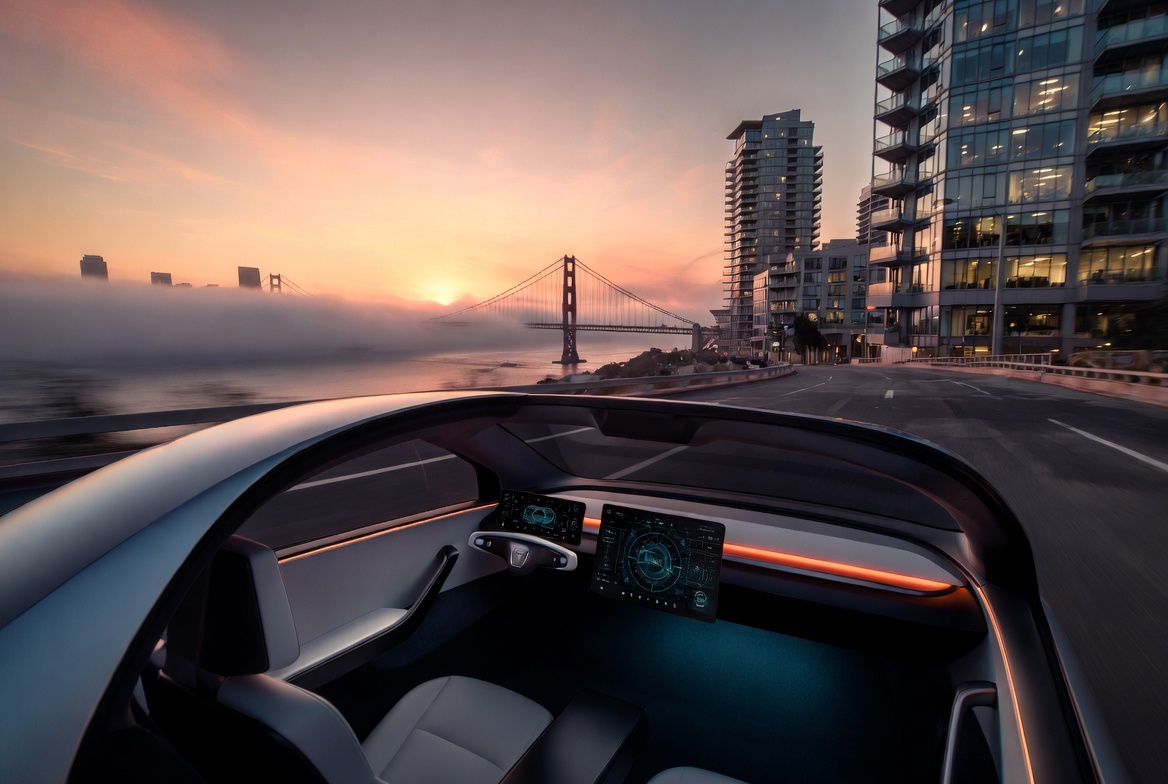
Before moving to Silicon Valley, Waymo felt almost like a myth.
I had seen videos online. I had read articles about autonomous vehicles. I knew Google had been working on self-driving technology for years. But from France, it still felt distant, experimental, and far from everyday reality.
Then I arrived in San Francisco.
Within my first few days, I downloaded the Waymo app and booked my first ride.
A few minutes later, a completely empty vehicle pulled up in front of me.
No driver.
No steering wheel movements from a human.
No conversation.
Just a car waiting for its passenger.
I remember thinking:
« This is what the future is supposed to feel like. »
The experience was surprisingly simple.
Open the app.
Choose a destination.
Confirm the ride.
A few minutes later, the vehicle arrives.
Everything feels intuitive.
Smooth.
Effortless.
What surprised me most was not the technology itself.
It was how normal it immediately felt.
After sitting down, a voice welcomes you, confirms your destination, and reminds you to fasten your seatbelt. The screens display your route, you can adjust the music, monitor the journey, and simply enjoy the ride.
Then comes the moment everyone talks about.
The car starts moving.
And nobody is driving.
Watching the steering wheel turn by itself for the first time is undeniably strange. Your brain knows the technology is supposed to work, but years of habit make it difficult to fully process what you are seeing.
Yet after a few minutes, that feeling disappears.
In fact, I quickly found myself feeling safer than I often do in traditional taxis or rideshare vehicles.
The driving is remarkably smooth.
No aggressive acceleration.
No sudden braking.
No distracted driver looking at a phone.
No risky decisions.
The vehicle simply follows the rules and focuses entirely on the road.
After several rides, I realized something important.
Waymo is not a technology demonstration anymore.
It is a transportation service.
People use it to go to work.
To restaurants.
To meetings.
To the airport.
To social events.
For many residents of San Francisco, autonomous vehicles have already become part of daily life.
As a French citizen, this realization was particularly striking.
I struggle to imagine a similar deployment happening in France or much of Europe anytime soon. The regulatory environment is significantly different, public acceptance remains more cautious, and the pace of adoption tends to be slower.
What feels revolutionary in California would still be considered highly experimental in many parts of the world.
And yet here, it is already happening.
Waymo also highlights one of the defining characteristics of Silicon Valley.
The future often arrives here first.
Many technologies that eventually become mainstream begin as experiments in the Bay Area. Smartphones, social networks, cloud computing, AI platforms, and now autonomous vehicles all followed a similar trajectory.
Today, Waymo may be the most visible example.
But it is no longer alone.
Amazon-owned Zoox is actively developing its own autonomous transportation platform. Tesla is also pushing forward with its vision of autonomous mobility through Cybercab and Full Self-Driving technologies. Increasingly, conversations about transportation in Silicon Valley are no longer focused on whether autonomous vehicles will become common.
They are focused on how quickly it will happen.
That shift is remarkable.
Only a few years ago, self-driving cars felt like science fiction.
Today, they are simply another way to get across San Francisco.
Every time I step into a Waymo, I am reminded of one of the reasons I wanted to move to Silicon Valley in the first place.
Not because the future is being discussed here.
But because, in many ways, it is already being built.
And sometimes, it arrives to pick you up.
